


Your phone rings, and it could be a friend or a trap. Scammers know how to hide behind area codes that seem familiar, and one wrong move could cost you hundreds. So, what should you do, and what are the 5 area codes to avoid?
In this review, we’ll walk you through five area codes you should never answer and show how GEOfinder’s reverse phone lookup helps you check numbers before you pick up, keeping your money and sanity safe.
Why You Should Never Answer Calls from Certain Area Codes
Sometimes, a phone call is more than just a nuisance. It can be a direct path to losing money or compromising your personal information! Thus, before we list you the five area codes you should never answer, we’d ike to explain why vigilance is key:
- Targeting unfamiliar area codes: Scammers focus on numbers that seem foreign or unusual to lure you into expensive international or premium-rate calls, exploiting your curiosity.
- The “one ring” scam: Calls ring once and hang up to provoke curiosity, prompting victims to call back immediately at high per-minute charges.
- Disguised international numbers: Many Caribbean and Latin American area codes mimic U.S. numbers, so you may not realize you’re connecting to a costly international line until it’s too late.
- Delayed realization of costs: Often, victims only discover the charges when reviewing their phone bills, by which point significant fees may have accumulated.
- Prevalence due to technology: Caller ID spoofing and automated calling systems make scam area codes increasingly common, making it easier for scammers to reach thousands of people rapidly.
What’s worse? The rise of AI, caller ID spoofing, and the proliferation of new area codes make it easier for scammers to reach large numbers of people efficiently. Fortunately, there are tools that let you check unknown numbers before answering or returning a call, providing an important layer of protection. It will protect you from five area codes you should never answer (on) Android and iOS, eliminating stress and safeguarding you from any potential danger associated with scam calls.
Never Answer Calls From These Area Codes
So, what are the 5 area codes to avoid? Knowing which numbers to avoid can prevent costly mistakes. So, never answer calls from these area codes:
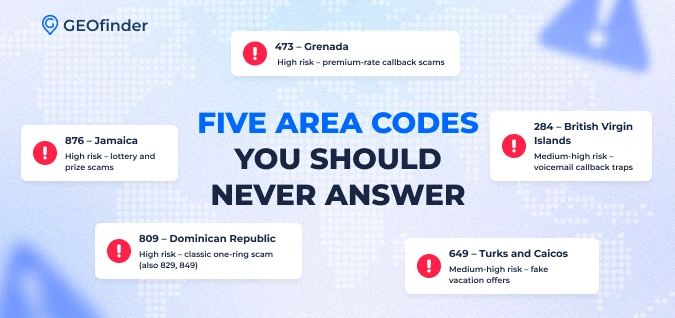
Area Code 473 (Grenada)
- Location: Grenada, Caribbean
- Why it’s dangerous: This area code is often used for premium-rate international calls disguised as U.S. numbers, which can result in high charges if you call back.
- Common scam tactics used: Scammers use “one ring” calls to provoke curiosity, leave urgent voicemails to create false urgency, or send fake prize notifications to trick victims into returning the call.
- Average cost per minute if you call back: $15-30, which can quickly add up with longer calls.
Area Code 809 (Dominican Republic)
- Location: Dominican Republic
- Why it’s dangerous: This is one of the oldest and most notorious Caribbean scam area codes, historically used to trick unsuspecting callers into expensive international lines.
- How the scam works: Scammers often employ the “one ring” tactic, calling once and hanging up, hoping curiosity will prompt a costly callback.
- Associated area codes: 829, 849, which are frequently used in similar scams targeting U.S. numbers.
- Average cost per minute if you call back: $20-25, with total charges rising rapidly if multiple calls are made.
Area Code 876 (Jamaica)
- Location: Jamaica
- Why it’s dangerous: Frequently exploited for lottery, prize, and sweepstakes scams that pressure victims into returning calls.
- Common tactics: Scammers send “You’ve won” messages, fake prize notifications, or claim urgent emergencies to trick victims into calling back.
- Connection to other fraud schemes: Often linked to identity verification scams, phishing, and attempts to gather personal information.
- Average cost per minute if you call back: $18-30, with costs escalating quickly with multiple calls.
Area Code 284 (British Virgin Islands)
- Location: British Virgin Islands
- Why it’s dangerous: This area code is often associated with premium-rate calls, which can quickly incur high charges if returned.
- How scammers use voicemail to lure callbacks: Fraudsters leave false urgent messages, such as claiming a relative is in trouble, or there is an immediate legal matter, prompting victims to call back without thinking.
- Average cost per minute if you call back: $15-28, with total charges rising rapidly based on call duration.
Area Code 649 (Turks and Caicos)
- Location: Turks and Caicos Islands
- Why it’s dangerous: Scammers use this area code to impersonate travel agents or hotel staff.
- How they appear legitimate: Calls may mimic legitimate travel agency numbers, offer fake vacation deals, or claim urgent booking issues.
- Average cost per minute if you call back: $20-30
Please remember the information below and do not answer calls from these area codes.
Complete List of Area Codes Not to Answer
Beyond the five most dangerous area codes, many others have been reported for scams. The list below will help you stay alert and avoid costly mistakes.
Never answer calls from these area codes:
Caribbean and Latin American Scam Area Codes
Here’s a list of area codes not to answer:
- 242 (Bahamas)
- 246 (Barbados)
- 264 (Anguilla)
- 268 (Antigua)
- 345 (Cayman Islands)
- 441 (Bermuda)
- 664 (Montserrat)
- 721 (Sint Maarten)
- 758 (St. Lucia)
- 767 (Dominica)
- 784 (St. Vincent & Grenadines)
- 787, 939 (Puerto Rico – sometimes used)
- 868 (Trinidad and Tobago)
Other Suspicious Area Codes to Watch
What are the other area codes you should not answer? Sometimes scams hide in plain sight; the safest approach is to be cautious. Consider the following:
- Any area code you don’t recognize: Unfamiliar numbers may be attempts to trick you into calling back. Consider avoiding these area codes.
- The other area codes you should not answer: Outgoing from regions where you have no contacts: if you have no personal or business connection, think twice before answering.
- Recently introduced area codes often exploited by scammers: New codes can be misused to avoid detection and lure victims into expensive calls. Do not answer these area codes.
How Scammers Use Area Codes to Trick You
Scammers don’t rely on luck. They rely on psychology. Area code scams are designed to trigger specific human responses, such as curiosity, fear, excitement, or urgency. By knowing everything about phone scams, you’re far less likely to fall for them.
The “One Ring” Scam
This scam is built entirely around curiosity. The scammer calls your phone and hangs up after one quick ring, just enough for you to notice a missed call. Many people instinctively call back. The moment you do it, you’re connected to a premium-rate international number that starts charging immediately.
The Voicemail Trap
Scammers leave voicemail messages claiming there’s an emergency involving a family member, a delivery issue, a legal matter, or a prize waiting to be claimed. The message is often intentionally vague, prompting you to call back for details. Once you do, you’re either charged premium rates or manipulated into sharing personal or financial information.
Caller ID Spoofing
It is almost impossible to trace spoofed phone number. Caller ID spoofing makes scams far more convincing. Scammers use technology to make a call appear to be from a local or trusted area code, even when it’s not. This is why even familiar area codes can be dangerous.
How to Identify Scam Calls from Area Codes
Identifying scam calls before they cause damage is crucial. Watch for these warning signs to protect yourself and know how to avoid wrong number scams:
- Unknown international area code: Pay attention to numbers that seem out of place.
- One ring then disconnect: A call that rings once and stops is a classic tactic to trigger curiosity; returning the call often results in expensive charges.
- No voicemail or suspicious voicemail: Legitimate callers usually leave clear messages.
- Calls at odd hours: Scammers often operate at late or unusual times to catch you off guard and reduce scrutiny.
- Multiple calls from similar numbers: Repeated attempts indicate automated scam systems trying to pressure you.
- Urgent callback requests: Messages that create unnecessary urgency are designed to bypass rational decision-making.
- Prize or emergency claims: Offers of winnings or emergencies are meant to manipulate emotions and prompt hasty action.
- Requests for personal information: Legitimate organizations rarely make such requests.
- Pressure to act immediately: Scammers exploit the fear of missing out or the urge to act now to trick victims into costly actions. Calls from countries you have no contacts in could be scams.
- One ring, then disconnect: Designed to tempt you to call back a premium line.
- No voicemail or suspicious voicemail: Legitimate calls often leave detailed messages; vague or missing messages are red flags.
- Calls at odd hours: Unusual times can indicate automated scam attempts.
- Multiple calls from similar numbers: Repeated attempts increase pressure and urgency.
- Urgent callback requests: Scammers use urgency to bypass rational thinking.
- Prize or emergency claims: Offers or crises meant to manipulate emotions.
- Requests for personal information: Legitimate entities rarely solicit sensitive data.
- Pressure to act immediately: Scammers exploit fear of missing out or a sense of urgency to trick victims.
What to Do If You Receive a Call from These Area Codes
Taking the right actions quickly can prevent financial loss and protect your personal information. Follow these practical steps when you receive a suspicious call:
Immediate Actions
Taking prompt and careful steps is essential to avoid falling victim to scams. Here’s what you should do:
- Don’t answer unknown area codes: Avoid picking up calls from numbers you don’t recognize.
- Don’t call back even if they leave a voicemail: Returning the call can trigger expensive premium rates or connect you with scammers.
- Block the number immediately: Use your phone’s built-in features or a third-party phone number tracker to prevent repeated attempts.
- Report the call to authorities: Notify the FTC, FCC, or local authorities to help track and stop scammers.
If You Already Called Back
If you’ve already returned a call to a suspicious number, act quickly to minimize financial loss and protect your personal information:
- Contact your phone carrier immediately: Inform them of the scam and request guidance on blocking charges.
- Dispute charges on your phone bill: Request a review of any unauthorized or suspicious charges to potentially have them reversed.
- File an FTC complaint: Report the incident to help authorities track scam activity.
- Monitor your phone bill for unusual charges: Check for repeated or unexpected costs.
- Document everything: Keep a record of calls, voicemails, and any correspondence for reporting and dispute purposes.
Using GEOfinder to Verify Unknown Numbers
Using a scammer phone number lookup tool like GEOfinder helps youproactively identify potentially dangerous calls before you answer. By checking the caller’s identity, you can distinguish between legitimate contacts and scam numbers.
GEOfinder also provides details on reported scam activity associated with each number, including potential red flags. It prevents costly callbacks and helps you make informed decisions.
Here’s how reverse phone lookup works:
- Enter the unknown number on the GEOfinder website.
- Review the caller details.
- Decide whether to answer or block the number.
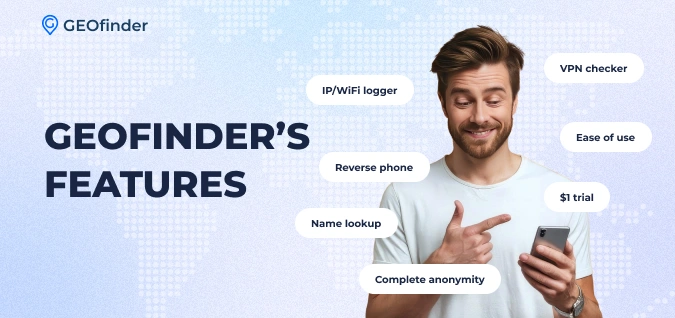
In addition to the reverse phone lookup feature and a $1 trial, GEOfinder can find social media by phone number and detect the caller’s ID, even when a VPN is enabled on it.
How to Block Scam Area Codes on Your Phone
Blocking scam area codes helps stop costly callbacks. You can block them in your phone’s settings, in apps, or in your carrier’s tools.
Blocking on iPhone
iPhone offers several ways to block unwanted or scam calls effectively. Options include:
- Built-in blocking features: Block specific numbers directly from your call history.
- Third-party apps: Use security apps to automatically filter and block suspicious calls.
- Carrier-level blocking: Many carriers provide network-level call filtering.
- Do Not Disturb settings for unknown callers: Silence calls from numbers not in your contacts to reduce exposure to scams.
Blocking on Android
Android devices also offer multiple ways to block scam calls effectively:
- Native Android call blocking: Block individual numbers directly from your call log or settings.
- Google Phone app features: Use call screening and spam detection to filter suspicious calls.
- Third-party security apps: Install apps that provide advanced call filtering and reporting of known scam numbers.
- Carrier blocking services: Many mobile carriers offer network-level blocking for scam numbers.
Carrier-Level Scam Protection
Carrier-level services provide network-based protection to block scam and spam calls before they reach your phone. Options include:
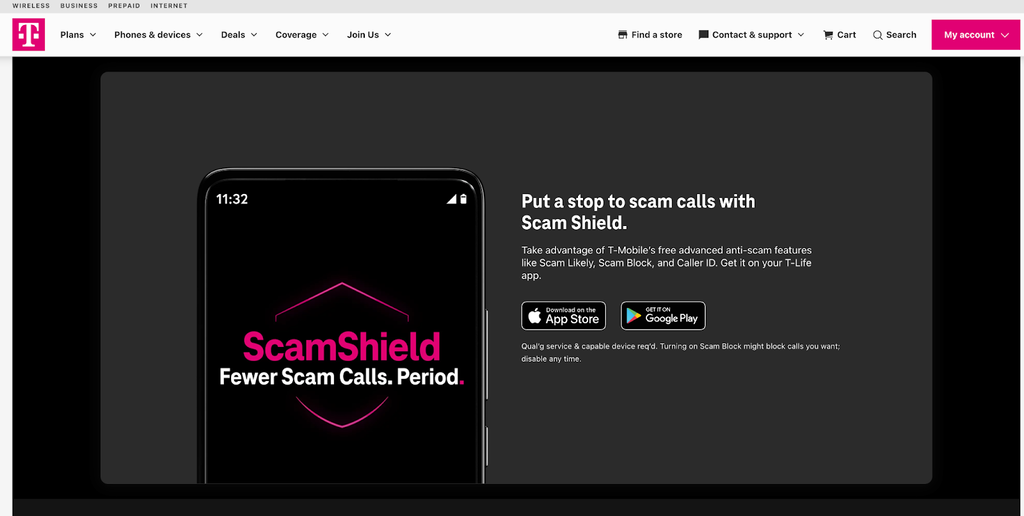
- T-Mobile Scam Shield: Offers free scam detection, caller ID, and blocking options.
- AT&T Call Protect: Provides fraud blocking and automatic alerts for suspected scam calls.
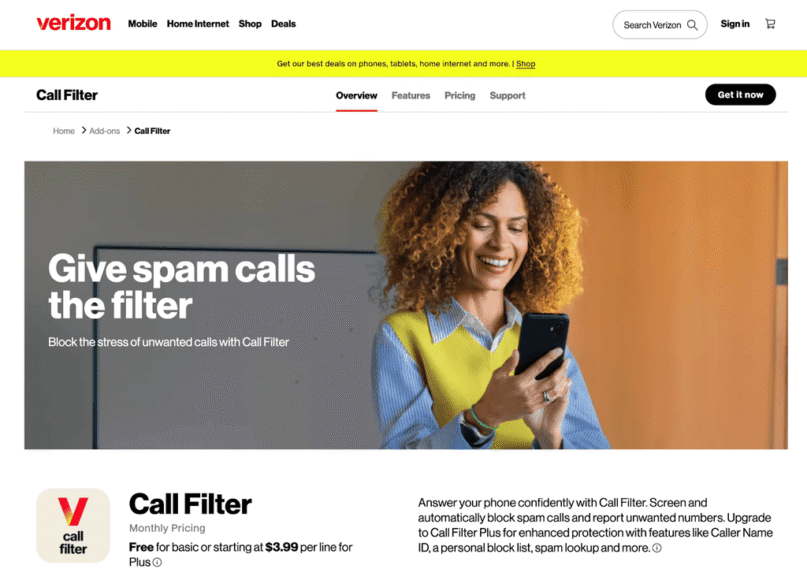
- Verizon Call Filter: Identifies spam and scam calls, and allows blocking or reporting.
- Other carriers: Most major carriers offer similar protection tools and spam filters, often included with your plan or as an add-on.
Area Code Scams vs. Other Phone Scams
| Scam Type | Typical Tactics | Emotional Trigger | Financial Risk | How to Protect |
| Area Code Scams | One-ring calls, premium-rate callbacks | Curiosity | High per-minute charges | Verify with GEOfinder, block unknown numbers |
| Robocalls | Automated voice messages, generic offers | Annoyance | Low to moderate, often ads | Use carrier spam filters, block numbers |
| Phishing Calls | Requests for personal info, fake account alerts | Fear | Identity theft, financial fraud | Never share info, verify independently |
| Tech Support Scams | Claims of computer problems, urgent fix needed | Fear, urgency | Varies, often extortion | Hang up, verify with official support lines |
| IRS/Government Impersonation | Threats of legal action or fines | Fear, urgency | Potential scams requesting payment | Verify independently, report to authorities |
| Grandparent Scams | Impersonate relatives in trouble | Fear, empathy | Financial loss through deception | Verify identity with family members before sending money |
Protecting Your Family from Phone Scams
Protecting your family requires education, proactive measures, and regular monitoring. Here are practical steps:
- Educate elderly parents about area code scams. Explain how scams work and encourage verification before returning calls.
- Teach teenagers about scam calls. Help them recognize red flags and avoid curiosity-driven callbacks.
- Set up call blocking for vulnerable family members. Use phone or carrier features to prevent scam calls from reaching them.
- Create a family protocol for unknown callers. Establish a system to verify numbers before answering. Also, create a list of area codes not to answer.
- Regularly review phone bills for unusual charges or patterns.
- Confirm emergencies with trusted family members before acting to reduce the risk of scams.
What to Do If You’ve Been Scammed
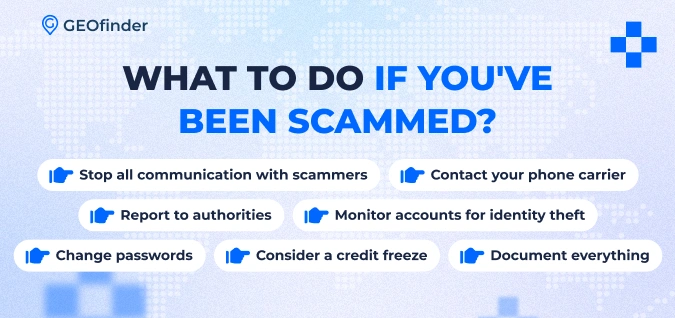
If you fall victim to a scam, acting quickly can limit financial and personal damage. Follow these recovery steps:
- Stop all communication with scammers: Do not respond to further calls, messages, or emails.
- Contact your phone carrier: Dispute any unauthorized charges and ask for guidance on blocking numbers.
- Report to authorities:
- FTC: ReportFraud.ftc.gov
- FCC: consumercomplaints.fcc.gov
- Local police (if a significant loss)
- IC3.gov for internet crimes
- Monitor accounts for identity theft: Keep a close eye on bank, credit card, and online accounts.
- Change passwords: Update credentials if any personal information was shared.
- Consider a credit freeze: Prevent new accounts from being opened in your name if sensitive info was compromised.
- Document everything: Keep detailed records of calls, messages, and any steps taken for potential reporting or legal follow-up.
Latest Area Code Scam Trends in 2026
Area code scams in 2026 are becoming more sophisticated and pervasive. Here’s a breakdown of the latest trends and threats you should be aware of:
- Exploitation of new area codes: Scammers continue to target newly introduced or unfamiliar area codes, which helps them evade detection and increases the likelihood that recipients will call back out of curiosity.
- AI voice cloning in callback scams: Fraudsters are using AI technology to mimic human voices, making scam calls more convincing and harder to detect.
- Sophistication of scammer tactics: Modern scammers combine multiple channels: text, social media, and voice, to create a sense of urgency and legitimacy, pressuring victims to act quickly.
- Statistical data on losses: These scams cost victims millions of dollars each year, often showing up as sudden, unexpected charges on phone bills.
- Geographic hotspots for scam origins: While scams can occur anywhere, highly connected urban regions report elevated activity. Scammers exploit these areas due to dense populations and higher call-answer rates.
Note: Can someone track your phone with your phone number? Unfortunately, yes. Therefore, be cautious, especially when responding to suspicious phone numbers.
FAQs About Area Code Scams
Can I be charged just by answering a call?
Simply answering a call usually does not incur a charge, but returning the call can be costly, especially if it connects to an international or premium rate line.
How do scammers profit?
Scammers primarily generate revenue through high per-minute charges on premium-rate numbers. Every callback generates revenue for them, and some schemes also collect personal or financial information for further fraud.
Are all calls from these area codes scams?
Not every call is a scam, but unfamiliar area codes, particularly from the Caribbean or Latin America, should be treated with caution. Verification with a reverse-lookup tool is recommended before responding.
What if I have legitimate contacts in these areas?
Confirm their phone numbers through a trusted channel. Even then, verify unfamiliar numbers to avoid accidentally connecting with a scammer.
Can scammers use local area codes?
Yes, scammers often use caller ID spoofing to display a local number. This technique tricks you into believing the call is legitimate, increasing the likelihood that you will answer.
How can I verify if a number is legitimate?
Use reverse phone lookup tools like GEOfinder. Enter the number to identify the caller and see reported scam activity before deciding whether to answer.
Will my carrier refund scam charges?
Some carriers may refund fraudulent charges if reported quickly. Keep records and contact your provider immediately if you suspect a scam.
Are area code scams illegal?
Yes, these scams violate telecommunications and fraud laws. Enforcement varies by region, but reporting every scam helps authorities track and prevent future incidents.
Conclusion
Recap the five area codes you should never answer: 473, 809, 876, 284, 649. Always follow the rule: when in doubt, don’t answer. Use GEOfinder’s reverse phone lookup to verify suspicious numbers before returning a call. Legitimate callers will leave a voicemail or text, so protect yourself and your family from unnecessary financial loss.
Comments